How AI is shaping Real Estate in India in 2026
After creating a wave of change in distinguished sectors, Artificial Intelligence is cementing the road for Indian real estate. Anticipated as an anchor for bull rush in real estate in India, AI will grow the momentum for residential and CRE in the Country. Here is everything to know about the impact of artificial intelligence in the Indian real estate sector.
What is Artificial Intelligence (AI)?
AI, as commonly known, is an advanced technology that enables computers to interpret human intelligence, breaking down the complexities of questions and suggesting relevant resolutions.
History and Timeline of AI Development in Indian Real Estate
The sector, which has been confronting several issues, including time, transparency, and legalities, finally has a reason to cheer. Artificial Intelligence is transforming the market's perception, affecting investors, end-users, developers, and consultants.
With technology-driven property market solutions, the Indian real estate looks more confident in introducing diverse portfolios. Commencing from generative pricing forms, to structural mapping, and the integration of automation to luxury residential projects in India.
How does AI in real estate in India affect property buyers? Does it simplify the process, or will it lower brokerage fees? These are a few questions the market look upto, interestingly, there aren’t any negative effect of using technology.
From being the country’s second-largest employer to a tech-driven market. The real estate in India has come a long way. While apprehensions surround anything new, the emergence of AI in real estate in India refines positivity.
Artificial Intelligence empowers buyers and sellers. The impression of technology is clearly visible in Tier I and II cities post pandemic. From virtual tours to 360 degree view and walkthroughs, a lot is being rendered to buyers.
Challenges of AI Adoption in Indian Real Estate
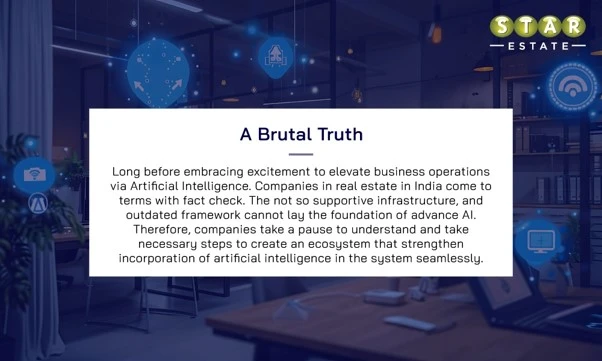
Despite not having negative reflections, the technology can be a reason for a slowdown in the business. Aligning with efficient buying capacity, there are certain blockages that need to be fixed. The bridging of infrastructure gaps, regulatory issues, and manual processes is the key to resolving hurdles.
Information Privacy
AI majorly relies on personal data, thus it is an alarm for personal data secrecy. However, the Union Government of India is working on laws, including the DPDP Act, to protect buyers’ information. But basic information remains with the seller, so how will personal data remain secure for property buyers?
The DPDP Act, i.e., The Digital Personal Data Protection Act, 2023, provides for the processing of digital personal data in a manner that recognises both the right of individuals to protect their personal data and the need to process such personal data for lawful purposes and for matters connected therewith or incidental thereto.
Also, sellers must do the needful to secure client details, and e-KYC is one of the best ways to protect buyer data.
Cost-Ineffectiveness
Are all developers in India using AI, or is it merely the beginning of technological advancement in the sector? Yes, not a majority of developers are using AI as one of their routine business practices, as the technology is expensive.
Is the workforce ready to integrate AI in Indian real estate? Well, the technology gave the much-needed boost to the market. But the lack of technical knowledge and ecosystem to translate AI’s features into functionality is the reason for the digital divide in the market.
Deficient Strategic Wisdom
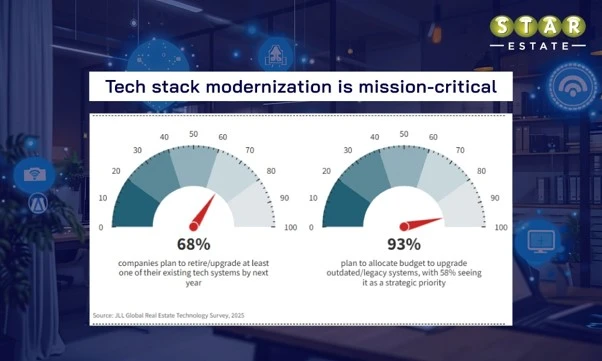
Over 50 per cent of real estate companies in India aim to integrate operations with Artificial Intelligence. However, despite having intentions to incorporate AI in business, the unclear strategies and experimental phase are a roadblock. Once clear roadmaps with growth metrics and strategic outlines are mapped, Artificial Intelligence will make profitability bounce back in Indian real estate.
Privacy Paralysis
The cybersecurity breach and leak of private data make developers think twice before making a move. In the current scenario, AI’s vulnerabilities and a weak digital security framework are among the major challenges ahead for real estate in India.
You may Also Like:Land Reforms – A Possible Catalyst for Affordable Housing in India
Future AI Trends in Indian Real Estate
Generative AI – The New Marketing Tool
Artificial Intelligence will evolve the marketing play with a digital rule book. Virtual Reality and Augmented Reality are going to be a part of the new marketing strategy. Also, the addition of pictorial representation will offer a clear vision of dream properties in India. With the alignment of Artificial Intelligence, developers find sticking to deadlines easier.
Also, the clear vision of ready to possession image-based approach encourages developers to ascertain the project’s justifiable value.
Distributed Ledger Technology
Commonly referred to as Blockchain technology, DTL, i.e., Distributed Ledger Technology, eliminates the traditional bookkeeping method. The introduction of DLT will bring in more transparency in property transactions. Thus, eliminating the chance of fraudulent activities in the Indian real estate.
Virtual Communities – Sales Funnel Analyses, Marketing and Customer Experience
The creation of virtual communities is one of the biggest impacts Artificial Intelligence has on real estate in India. Unlike now, developers and buyers won’t need to block a whole day for conversation. Rather, the communities on virtual platforms will ease communication between buyers and sellers.
From previewing properties to discussion on design, layout, and payment plans, will all be just a click away with AI.
Lead Quality Assessment – AI in India's real estate support business as several PropTech platforms integrates AI into CRM. Thus, it becomes easy to understand lead quality and conversion probability. Also, the automated follow-ups lower the financial and timely engagement with clienteles, allowing more time to discuss the closure of deals. Also, it allows the opportunity to focus on fresh leads to keep the sales funnel working effectively.
Customized Property Search – With each buyer having a distinguished list of properties with preferences, AI helps. Several AI-based systems assist buyers in shortlisting immovable assets based on their budget, price, location, and purpose of property purchase. Thus, lowering time-consuming activity to unlock the choicest asset.
Virtual Tours – AI in Indian real estate renders investment with a single click. The technology allows buyers and investors to explore properties in India. The virtual tours are best to save on time and money, as prospects can view the asset online prior to scheduling a site visit. The facility allows buyers to shortlist and explore the most suitable options to finalise the purchase decision in minimum possible time.
A Comprehensive Financial Ecosystem – AI Impact on Real Estate Transactions in India

Lower Fraudulence - A seamless ecosystem to share KYC, documents, and payments is the future. In short, from pre to post-sales assistance, every step will be easy, less time-consuming, and hassle-free. AI in Indian real estate is likely to eliminate fraudulent paperwork by signaling fake property-related documents.
Ease Loan Borrowing – The list of risks and benefits eases the loan borrowing activity. The largely available information related to the fast-paced procedure of loan disbursal.
Conclusion
With so much to explore, Artificial Intelligence in real estate in India is forecast to grow in all areas of the blue-collar market.
You may Also Like: India-US Trade Deal – Is it a Tailwind for Real Estate in India?
You may Also Like: Looking for Long-Term Investment Options? Here is why buying Property in North Bangalore is a Good Decision